
China's Wang Yi Courts Seoul With 'Strategic Autonomy' Pitch Amid Strains in US Alliance
Chinese Foreign Minister Wang Yi visited Seoul this week urging South Korea to balance ties with Beijing and Washington, as President Lee Jae-myung signalled interest in warmer relations with China against a backdrop of friction in the US-South Korea alliance.
Chinese Foreign Minister Wang Yi visited Seoul this week urging South Korea to balance ties with Beijing and Washington, as President Lee Jae-myung signalled interest in warmer relations with China against a backdrop of friction in the US-South Korea alliance.
Chinese Foreign Minister Wang Yi wrapped up a two-day visit to Seoul this week with a pointed message: South Korea should pursue what Beijing calls "genuine strategic autonomy" rather than aligning too closely with any single power. The trip, which included talks with Foreign Minister Cho Hyun, national security adviser Wi Sung-lac and President Lee Jae-myung, comes at a moment when Seoul's relationship with Washington has shown visible strain.
According to a readout from China's foreign ministry, Wang told Wi that Beijing hopes South Korea can develop relations with major powers such as China and the United States in parallel, without treating the two as mutually exclusive. He framed the appeal around avoiding "bloc confrontation," language that reflects Beijing's long-running effort to loosen Seoul's alignment with Washington's regional strategy.
Wang also addressed the North Korea question directly, arguing that durable peace on the peninsula depends on tackling the root causes of tension and on Washington easing what he described as a hostile posture toward Pyongyang. He said China hopes to see steps that revive dialogue and rebuild trust among the parties, eventually replacing the decades-old armistice with a formal peace arrangement.
For his part, President Lee used his meeting with Wang to strike a notably warm tone, telling the visiting minister he intends to use the upcoming APEC leaders' summit in southern China to lift bilateral relations to a higher level. The remark suggests Lee's government sees the gathering as an opportunity for a higher-profile engagement with Beijing, even as it continues to manage its security alliance with the United States.
The visit unfolded against a backdrop of unease in Seoul's ties with Washington, including reports that President Donald Trump has pushed the Pentagon to scale back joint military exercises with South Korean forces. That shift has fed uncertainty in Seoul about the durability of US security commitments, creating an opening that Beijing appears eager to exploit through renewed diplomatic outreach.
Analysts see Wang's Seoul trip as part of a broader Chinese push to reshape regional dynamics at a time of flux in US foreign policy, positioning Beijing as a stable partner while Washington's approach to alliance management appears less predictable. Whether Lee's government moves substantively closer to China, however, is likely to depend on how the North Korea standoff and the US alliance evolve in the months ahead.
Where it matters
Related coverage

Wang Yi's Seoul Visit Leaves South Korea Diplomatically Squeezed
As Trump Courts Kim, North Korea Raises Its Price While Seoul Fears Being Sidelined
North Korea is responding to President Trump's renewed outreach to Kim Jong Un by hardening its demands rather than shutting the door, leaving South Korea anxious it could be left out of talks that directly affect its own security.
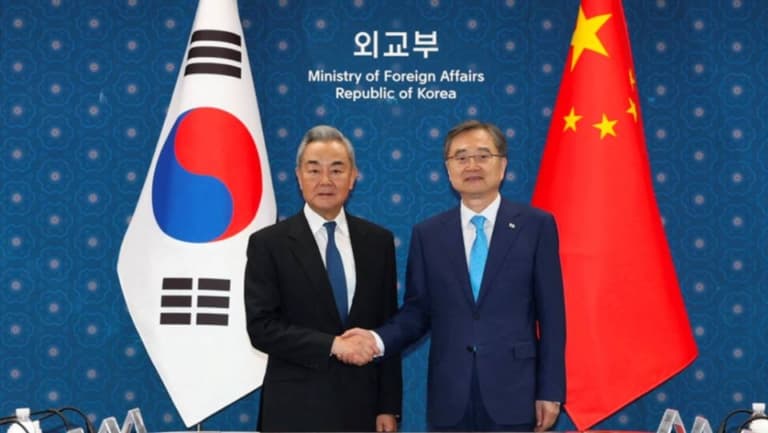
China and South Korea Prepare for Leaders' Summit on Sidelines of APEC Shenzhen
China's Wang Yi Visits Seoul as Trump Signals Push to Revive North Korea Talks
Chinese Foreign Minister Wang Yi arrived in Seoul for talks with his South Korean counterpart Cho Hyun, days after Seoul and Washington scaled back joint military exercises, as U.S. President Donald Trump voices renewed interest in engaging North Korean leader Kim Jong Un.