Samsung and SK hynix's Falling China Revenue Share Is a 'Statistical Illusion,' Data Shows
South Korea's semiconductor exports surged 165% through July to $233.3 billion, with China remaining the top buyer, even as Samsung Electronics and SK hynix appear to derive a smaller share of revenue from the country. Analysts say the drop is purely proportional, masking record absolute sales driven by HBM and AI-related chips.
South Korea's semiconductor exports surged 165% through July to $233.3 billion, with China remaining the top buyer, even as Samsung Electronics and SK hynix appear to derive a smaller share of revenue from the country. Analysts say the drop is purely proportional, masking record absolute sales driven by HBM and AI-related chips.
South Korea's semiconductor exports have hit unprecedented levels this year, and China continues to be the single largest buyer, according to a new report from the Ministry of Trade, Industry and Energy. Yet a curious statistic has drawn attention: both Samsung Electronics and SK hynix appear to be earning a smaller share of their total revenue from China than before. Analysts say this is not a sign of retreat, but rather an "optical illusion" produced by the sheer speed at which the two companies' overall businesses are expanding.
Cumulative semiconductor exports through July reached $233.3 billion, a 165.1% jump from $88 billion in the same period last year. Monthly shipments have topped $30 billion for five straight months and exceeded $40 billion in both June and July, pushing this year's average monthly figure to roughly triple last year's pace. China alone absorbed $11.56 billion worth of Korean chips in July, nearly four times the amount shipped to the United States, with exports to both countries growing by more than 180% year-on-year.
Despite this boom, Samsung Electronics' China revenue share is estimated to have slipped from around 25% last year to about 20% this year, while SK hynix's share reportedly fell from 23% to roughly 18%. The underlying dollar figures tell a different story: Samsung's China revenue, including Hong Kong, climbed from roughly $45.8 billion in 2024 to $50.5 billion in 2025, while SK hynix's rose from about $15.8 billion to $18.4 billion over the same span. In other words, China sales for both firms are still growing — just not as fast as their overall business, which is being supercharged by high-bandwidth memory (HBM), AI server DRAM and enterprise SSDs.
The scale of that broader growth is striking. Samsung's device solutions division alone posted first-quarter revenue of roughly $57.7 billion this year, an 88% year-on-year increase, driving the falling China ratio even as actual China sales keep climbing. A Samsung Electronics representative said there has been no internal discussion of scaling back the company's presence in China, and an SK hynix official noted the firm currently struggles to meet Chinese demand for DRAM rather than losing ground to local rivals.
The rise of Chinese memory makers such as ChangXin Memory Technologies (CXMT) and Yangtze Memory Technologies (YMTC) is being watched closely. CXMT has expanded its global DRAM market share from about 3% in early 2025 to roughly 8% a year later, largely by supplying general-purpose DDR4 and DDR5 chips to domestic buyers. Still, industry insiders and securities analysts say the technology gap of three to four years, combined with soaring memory prices, should shield Korean producers' profitability for the near term. DDR5 8Gb chip prices, for instance, jumped more than 500% year-on-year in July, while NAND 128Gb prices nearly quadrupled.
Government officials and market analysts remain upbeat about the rest of the year. Kang Gam-chan, deputy minister for trade and investment, said price gains for memory chips are likely to continue, supported by capacity expansions at domestic factories. Securities analysts, including Hanwha Investment & Securities' Lim Hye-yoon, forecast exports could grow by more than 200% in the second half, while Shinhan Investment's Lee Jin-kyung pointed to sustained demand tied to global AI infrastructure buildouts.
Longer term, Beijing's push for semiconductor self-sufficiency — targeting 80% domestic supply of core components — is seen as the more meaningful risk. Backed by state support, CXMT is expanding factories in Hefei, Shanghai and Beijing, and South Korean authorities have already prosecuted cases of technology leakage to Chinese rivals. For now, though, industry watchers say the current memory "super-cycle" leaves little room for immediate disruption, even as they keep a close eye on China's next moves.
Related companies
Where it matters
Related coverage
South Korean Stocks Rebound on Semiconductor Export Surge; Samsung Electronics Jumps 4.13%
South Korea's KOSPI and KOSDAQ extended gains for a second straight session on August 11 after customs data showed semiconductor exports more than doubled in early August, sending Samsung Electronics up 4.13% and lifting SK Hynix out of early losses.

SK Hynix to Pour $38 Billion Into New Memory Chip Plants as AI Demand Soars
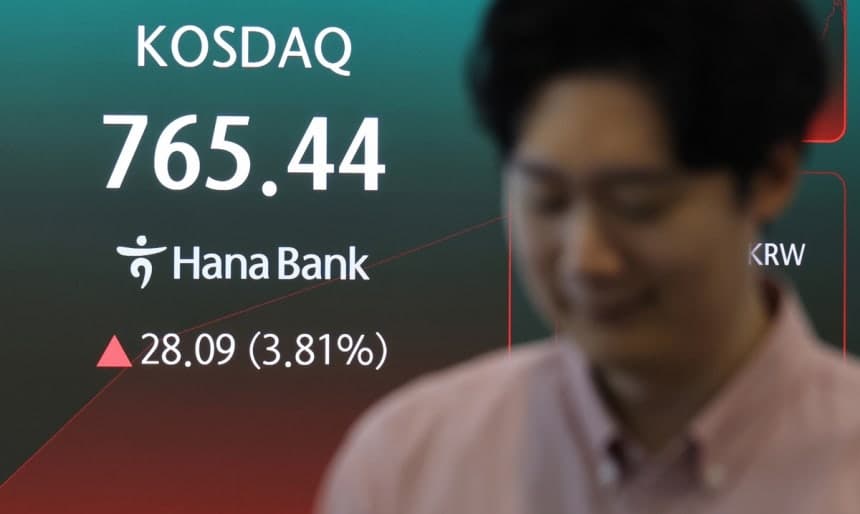
Samsung, SK Hynix Slide, but Warmth Spreads Across KOSPI and KOSDAQ
KOSPI's Blistering Crash Raises Fears South Korea Is Becoming Uninvestable
South Korea's benchmark KOSPI has plunged nearly 40% in just 27 trading days as the AI-driven rally that once lifted chipmaker stocks unravels, drawing comparisons to China's 2015 market meltdown. A Bloomberg Opinion column warns the speed of the collapse is testing whether Korean equities can still be considered a reliable investment destination.