Samsung, SK Hynix Slide, but Warmth Spreads Across KOSPI and KOSDAQ
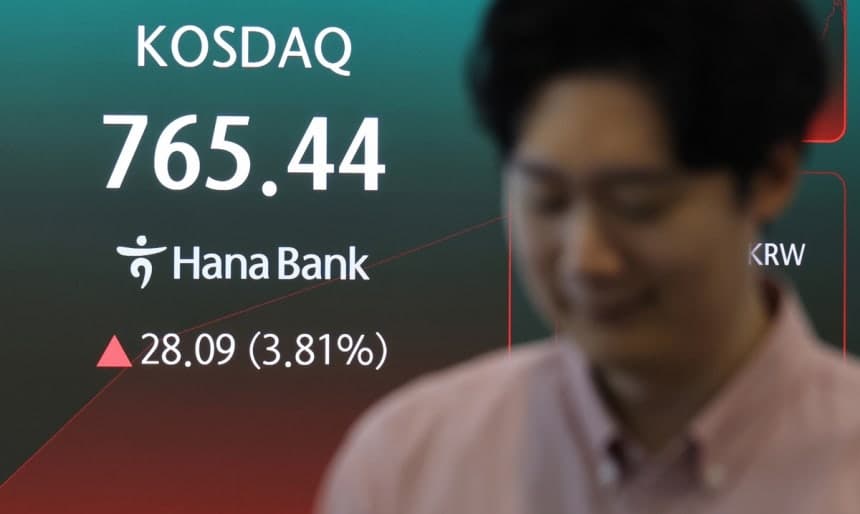
South Korea's stock market split on August 4 as chip giants Samsung Electronics and SK Hynix each dropped more than 3%, dragging the KOSPI lower even as advancing stocks vastly outnumbered decliners and the KOSDAQ jumped 5.11% to trigger a buy sidecar for a third straight session.
South Korea's stock market split on August 4 as chip giants Samsung Electronics and SK Hynix each dropped more than 3%, dragging the KOSPI lower even as advancing stocks vastly outnumbered decliners and the KOSDAQ jumped 5.11% to trigger a buy sidecar for a third straight session.
Seoul's stock market delivered a split verdict on August 4, with the benchmark KOSPI slipping into negative territory even as broader sentiment across both exchanges stayed upbeat. According to the Korea Exchange, the KOSPI stood at 6,201.89 as of 1:30 p.m. local time, down 0.89% from the previous close. The index had jumped more than 1% at the open, tracking an overnight rally on Wall Street, and briefly touched around 6,380 before profit-taking in large-cap chip names dragged it down to roughly 6,100. It later clawed back some ground to hover near the 6,200 line.
The pullback was driven almost entirely by the country's two dominant memory chipmakers. Samsung Electronics fell 3.13% and SK Hynix dropped 3.06%, with Samsung Electro-Mechanics and Hyundai Motor also under pressure, off 2.12% and 2.29% respectively. Traders pointed to fresh reports about a capacity expansion at China's Changxin Memory Technologies, known as CXMT, which stoked worries about tougher competition in the memory market and prompted investors to book profits after a strong run in chip shares.
Yet the weakness in a handful of heavyweights masked a far healthier picture underneath. On the KOSPI, advancing issues outnumbered decliners by a wide margin, 691 to 186, suggesting money was rotating into other sectors rather than fleeing the market altogether. Standout gainers included LIG Nex1's defense and aerospace unit, up nearly 13%, along with SK Telecom, Hanwha Aerospace, Naver and Doosan Enerbility, each climbing between roughly 6% and 10% on the day.
The smaller-cap KOSDAQ told an even more upbeat story. The index surged 5.11% to close at 775.06, marking its third consecutive session strong enough to trigger a buy sidecar, a circuit-breaker mechanism activated when program buy orders push the market up sharply. Breadth was overwhelming, with 1,429 stocks advancing and nine hitting their daily upper limit; of the fifty largest companies on the exchange by market value, 47 posted gains, spanning biotech, secondary battery makers and robotics firms.
Trading flows underscored the diverging appetite between the two markets. On the KOSPI, individual investors were net buyers to the tune of 700 billion won, while foreign and institutional investors sold a combined roughly 780 billion won. On the KOSDAQ, the pattern flipped, with institutions net buying 453.7 billion won even as individuals and foreigners were both net sellers.
Analysts described the session as a textbook case of sector rotation rather than a broader risk-off move. Kang Jin-hyuk, a researcher at Shinhan Investment Corp, said large-cap chip stocks were being pressured by "noise" tied to the CXMT expansion news, but that the resulting easing of concentration was pushing capital toward names in biotech and secondary batteries, fueling the KOSDAQ's outperformance. With semiconductor stocks having led gains through the first half of the year, the shift suggests investors are broadening their bets even as they stay cautious on the sector that powered the market's earlier rally.
Where it matters
Related coverage
KOSPI's Blistering Crash Raises Fears South Korea Is Becoming Uninvestable
South Korea's benchmark KOSPI has plunged nearly 40% in just 27 trading days as the AI-driven rally that once lifted chipmaker stocks unravels, drawing comparisons to China's 2015 market meltdown. A Bloomberg Opinion column warns the speed of the collapse is testing whether Korean equities can still be considered a reliable investment destination.
South Korea's July Exports Surge to Second-Highest Level on Record
South Korea's July Exports Hit $98.89 Billion as Chip Boom Fuels Trillion-Dollar Hopes — But Warnings Grow Over Semiconductor Dependence