South Korean Stocks Rebound on Semiconductor Export Surge; Samsung Electronics Jumps 4.13%
South Korea's KOSPI and KOSDAQ extended gains for a second straight session on August 11 after customs data showed semiconductor exports more than doubled in early August, sending Samsung Electronics up 4.13% and lifting SK Hynix out of early losses.
South Korea's KOSPI and KOSDAQ extended gains for a second straight session on August 11 after customs data showed semiconductor exports more than doubled in early August, sending Samsung Electronics up 4.13% and lifting SK Hynix out of early losses.
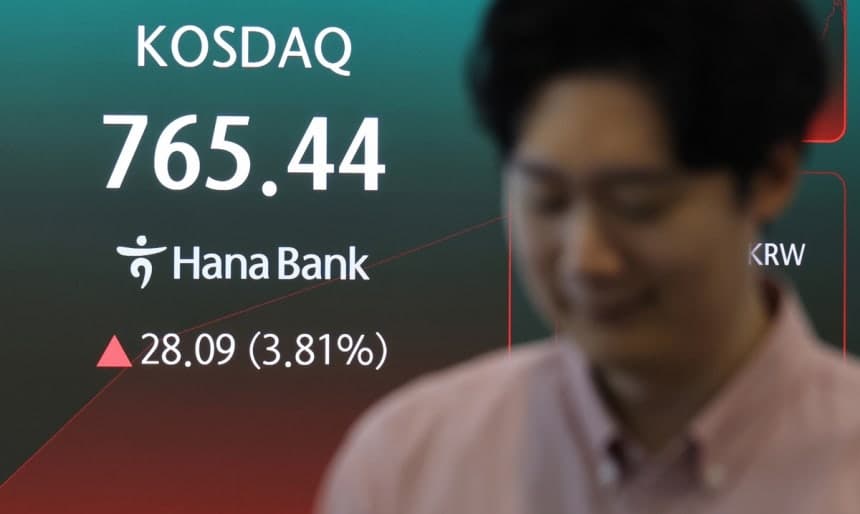
South Korean stocks closed higher for a second consecutive session on August 11, shaking off early weakness after Korea Customs Service data revealed a stunning surge in semiconductor exports for the start of the month. The benchmark KOSPI rose 0.73% to close at 6,345.53, while the tech-heavy KOSDAQ gained 0.39% to finish at 857.84, with both indices reversing losses that had followed overnight declines on Wall Street.
The rally was ignited by trade figures showing that semiconductor exports jumped 155.4% year-over-year to $9.95 billion in the first ten days of August, helping push total exports up 45.3% to $21.3 billion for the period, a record for early-month figures. Semiconductors alone accounted for 46.8% of all exports, more than 20 percentage points above the same period last year, underscoring the sector's outsized role in the export-driven economy.
Samsung Electronics was the standout performer, closing at 239,500 won (about $169.06), up 4.13% after briefly falling to 224,000 won earlier in the session. SK Hynix also opened lower but recovered to finish up 0.35% at 1.43 million won (about $1,005.87). The turnaround came despite a rough session for chipmakers on Wall Street overnight, where Nvidia and Micron both declined amid stalled U.S.-Iran talks over the Strait of Hormuz.
Analysts said the export data helped ease fears that memory chip prices had peaked. Lee Kyung-min of Daishin Securities said the numbers reaffirmed the earnings momentum in the chip sector. Foreign investors, who had been net sellers for four straight sessions, returned as net buyers on the KOSPI, purchasing roughly 44.6 billion won worth of shares, while institutional investors extended their buying streak to three sessions. Retail investors were net sellers on the main board but provided strong support on the KOSDAQ.
By sector, semiconductors, software, insurance and pharmaceuticals led gains, while shipbuilding and electrical equipment stocks lagged. Smaller semiconductor equipment makers also rallied, with Jusung Engineering surging more than 12%.
Despite the rebound, analysts flagged lingering risks. Concerns persist over Nvidia's newly launched $500 billion AI financing platform with partners including Apollo and BlackRock, which has revived debate over circular financing within the AI industry. Middle East tensions tied to the Strait of Hormuz talks also remain a source of caution. Han Ji-young of Kiwoom Securities noted that geopolitical friction has so far acted more as background noise than a trend-breaking factor, and pointed to upcoming U.S. tech earnings and potential shareholder-return announcements from Korean chipmakers as catalysts that could sustain the rebound in both large- and small-cap stocks.
Related companies
Where it matters
Related coverage
Samsung and SK hynix's Falling China Revenue Share Is a 'Statistical Illusion,' Data Shows
South Korea's semiconductor exports surged 165% through July to $233.3 billion, with China remaining the top buyer, even as Samsung Electronics and SK hynix appear to derive a smaller share of revenue from the country. Analysts say the drop is purely proportional, masking record absolute sales driven by HBM and AI-related chips.

SK Hynix to Pour $38 Billion Into New Memory Chip Plants as AI Demand Soars
Bank of Korea Board Divided as August Rate Hike Odds Rise