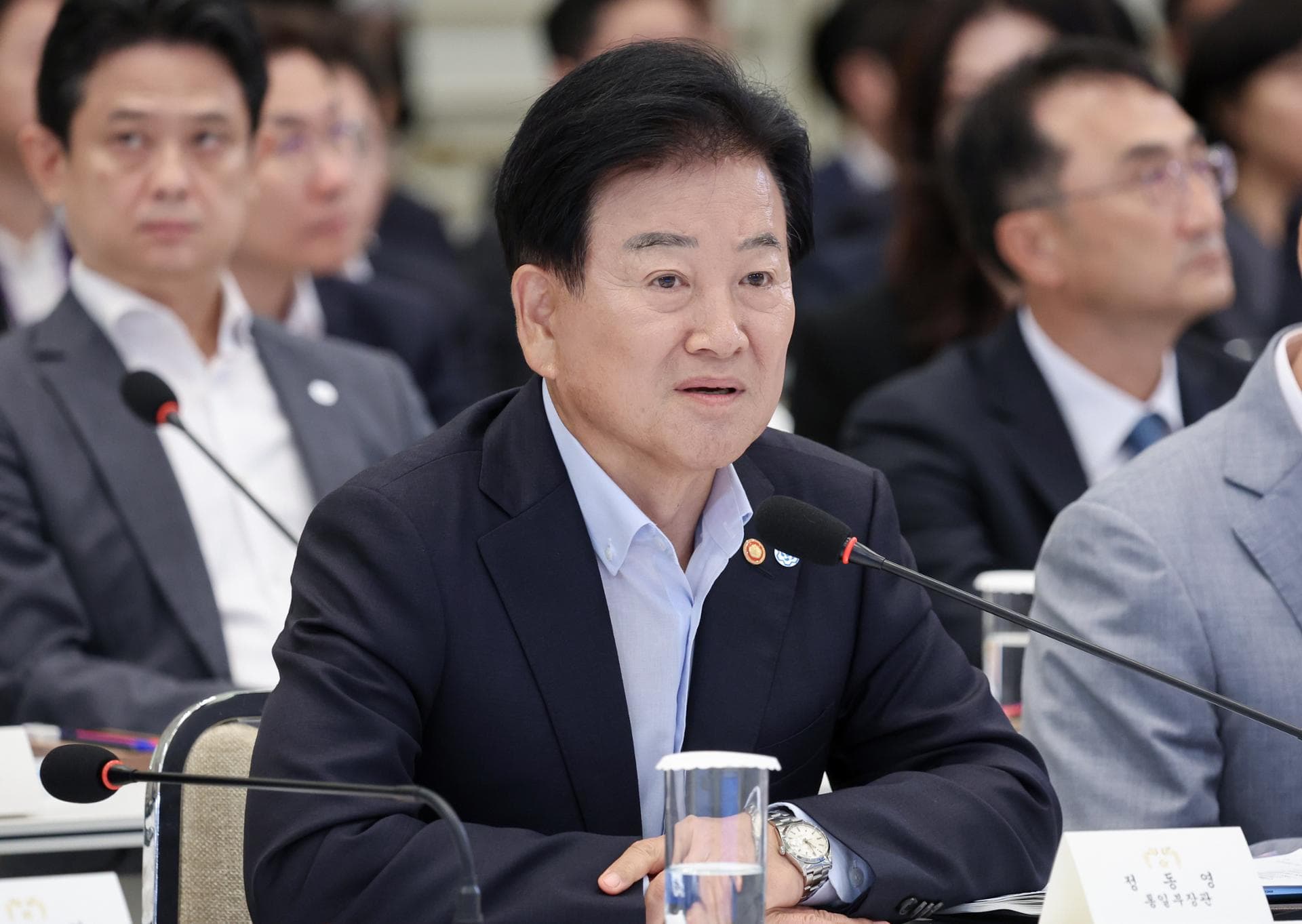
Unification Minister Pushes to Drop 'Main Enemy' Label for North Korea
Unification Minister Chung Dong-young has proposed dropping South Korea's 'main enemy' designation for North Korea to help revive inter-Korean dialogue, a plan that has drawn pushback from the defense ministry and cautious hesitation from President Lee Jae Myung.
Unification Minister Chung Dong-young has proposed dropping South Korea's 'main enemy' designation for North Korea to help revive inter-Korean dialogue, a plan that has drawn pushback from the defense ministry and cautious hesitation from President Lee Jae Myung.
South Korea's Unification Minister Chung Dong-young has proposed scrapping the government's longstanding designation of North Korea as the country's "main enemy," arguing the label undermines efforts to restart dialogue with Pyongyang. He unveiled the idea while presenting the ministry's work plan for the second half of 2026 to President Lee Jae Myung during a policy briefing in Seoul on Wednesday, a proposal that immediately drew objections from the defense ministry.
According to the plan, the unification ministry intends to break with the previous government's approach of pursuing unification through the absorption of the North, instead exploring a new framework built around coexistence. Chung told the briefing that recognizing each other by name marks an essential starting point, and said the two Koreas needed to stop using "hostile, hate-filled language" toward one another, according to a ministry readout of his remarks.
Chung had laid out his thinking in more detail a day earlier, telling reporters that the word "enemy," used during the Yoon Suk Yeol administration, does not fit a policy aimed at peaceful coexistence, and that the term "threat," used under the Roh Moo-hyun and Moon Jae-in governments, was a better fit. He also described the current arrangement, in which the commander-in-chief brands the North a "main enemy," as a troubling status quo that needs to end, adding that his ministry would work to lower tensions and pursue a nuclear-free Korean Peninsula.
The idea is not new to policy discussions — it has surfaced at earlier security-related meetings — but the defense ministry has consistently pushed back. The disagreement takes on added weight as the ministry prepares the 2026 edition of its biennial Defense White Paper, the first to be issued under the Lee administration, with observers watching closely for how it will describe the North. The 2022 edition under Yoon labeled the North Korean regime and military "our enemy," continuing language reinstated by the Lee Myung-bak and Park Geun-hye governments after Roh's administration had dropped the "main enemy" wording used from 1995 to 2004 in favor of "threat." This year's white paper is widely expected to keep the "enemy" phrasing intact.
Chung went a step further by suggesting Seoul refer to North Korea by its formal title, the Democratic People's Republic of Korea, or by its Korean shorthand "Joson," to help create a more conciliatory atmosphere. President Lee responded cautiously, noting that Chung had already faced significant criticism after publicly using the DPRK label, and warned that even well-intentioned proposals can backfire if they become entangled in political disputes. Chung avoided using the term "Joson" during Wednesday's briefing itself, despite having used it in public settings on other occasions.
The debate comes as North Korea has been moving in the opposite rhetorical direction. Leader Kim Jong-un declared in December 2023 that inter-Korean ties should be treated as relations between "two hostile states," effectively shelving Pyongyang's own unification goal, and in March he went further by labeling South Korea the North's "most hostile state." Against that backdrop, Chung's push to soften Seoul's language faces an uphill battle both within the government and in the wider political arena.
Where it matters
Related coverage
South Korea Abandons 'Denuclearization First' Approach Toward North Korea
Seoul says it will now push to freeze North Korea's nuclear program in exchange for concessions rather than demand immediate disarmament, a shift that comes as Pyongyang deepens military ties with Moscow and Beijing.
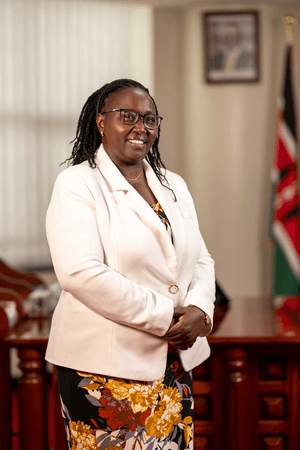
Kenyan Minister Points to South Korea as Model for Merging Heritage and Innovation
Lee Jae Myung Wraps Up Five-Nation Tour With Frankfurt Stop
South Korean President Lee Jae Myung concluded a 10-day, five-nation diplomatic swing in Frankfurt, capping a trip that produced new lithium and energy commitments with Argentina and reaffirmed Seoul's push to become a global AI semiconductor hub.