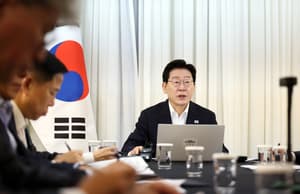
South Korea Abandons 'Denuclearization First' Approach Toward North Korea
Seoul says it will now push to freeze North Korea's nuclear program in exchange for concessions rather than demand immediate disarmament, a shift that comes as Pyongyang deepens military ties with Moscow and Beijing.
Seoul says it will now push to freeze North Korea's nuclear program in exchange for concessions rather than demand immediate disarmament, a shift that comes as Pyongyang deepens military ties with Moscow and Beijing.
South Korea is formally stepping back from decades of insisting on North Korea's complete and immediate denuclearization, opting instead for a staged approach that starts with freezing Pyongyang's weapons program. Unification Minister Chung Dong-young laid out the new strategy on July 23, saying the government will pursue reciprocal concessions in exchange for a halt to further nuclear advances rather than demanding the North give up its existing arsenal from the outset. President Lee Jae Myung has described the rationale behind the pivot as facing up to what he called a difficult truth about the region's security landscape.
The recalibration unfolds against a backdrop of North Korea drawing closer to Russia and China. Ukrainian President Volodymyr Zelenskyy said on July 25 that Moscow was preparing to receive roughly 30,000 additional North Korean troops to bolster its war effort against Ukraine, on top of forces already deployed. At the same time, global pressure on Pyongyang has grown noticeably more fragmented. U.S. President Donald Trump has repeatedly described North Korea as a 'nuclear power,' language that breaks with Washington's traditional refusal to grant the North that status even informally.
Analysts note that Washington's most recent National Security Strategy left out any reference to North Korea or denuclearization entirely, a striking omission compared with past doctrines. Beijing, too, appears to be softening its public stance: when Chinese President Xi Jinping traveled to Pyongyang in June, he reportedly avoided raising denuclearization, despite China's long-standing formal support for a nuclear-free Korean Peninsula.
Emboldened by this shifting climate, North Korea has become increasingly blunt in dismissing calls to disarm. Kim Yo Jong, sister of leader Kim Jong Un, said in June that expanding the country's nuclear arsenal represents a conclusion that cannot be reversed. This week she also brushed aside a joint statement from the ASEAN Regional Forum urging denuclearization, arguing the concept no longer carries any real meaning. Experts point out that Kim Jong Un has since written the country's nuclear status into its constitution, making any reversal politically costly for his leadership.
Researchers say the price of holding onto nuclear weapons has fallen as international sanctions lose their bite, partly because Beijing and Moscow are seen as easing enforcement even as both governments deny wrongdoing. Meanwhile Pyongyang's capabilities keep growing: Kim Jong Un announced in June that the country's output of weapons-grade fissile material has more than doubled over five years, and the Stockholm International Peace Research Institute estimates North Korea now holds around 60 warheads with material for at least 30 more.
Despite Seoul's more flexible posture, regional experts remain skeptical that Pyongyang will return to negotiations anytime soon. Some argue the policy change is more symbolic than substantive, while others say Kim Jong Un has little incentive to talk while his partnership with Russia continues to deliver strategic and economic benefits. Russian officials, including Foreign Minister Sergey Lavrov, have publicly backed North Korea's right to retain nuclear weapons, further reducing Pyongyang's motivation to negotiate away its arsenal.
Where it matters
Related coverage
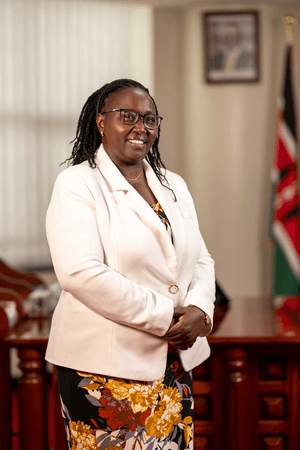
Kenyan Minister Points to South Korea as Model for Merging Heritage and Innovation
Lee Jae Myung Wraps Up Five-Nation Tour With Frankfurt Stop
South Korean President Lee Jae Myung concluded a 10-day, five-nation diplomatic swing in Frankfurt, capping a trip that produced new lithium and energy commitments with Argentina and reaffirmed Seoul's push to become a global AI semiconductor hub.

New US Ambassador Michelle Steel Arrives in Seoul, Vows to Strengthen 'Ironclad' Alliance