Lee Jae-myung Charts Path Between Strategic Autonomy, Alliance Ties and North Korea Outreach
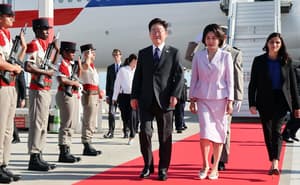
During a state visit to France, President Lee Jae-myung laid out a foreign policy vision that blends greater strategic autonomy for Seoul with a reaffirmed US alliance and renewed efforts to re-engage North Korea.
During a state visit to France, President Lee Jae-myung laid out a foreign policy vision that blends greater strategic autonomy for Seoul with a reaffirmed US alliance and renewed efforts to re-engage North Korea.
President Lee Jae-myung used his state visit to France to sketch out the contours of a foreign policy that tries to hold several competing priorities together at once: deeper strategic autonomy for South Korea, an enduring alliance with the United States, and a fresh attempt at dialogue with North Korea. Speaking in Paris ahead of a summit with French President Emmanuel Macron, Lee described his approach as one of "pragmatic, open cooperation," arguing that middle powers like South Korea and France should be able to work together on shared values without weakening their existing security partnerships.
That framing appears designed to answer a question that has followed Lee since he took office: whether Seoul, under a leader who has spoken often about reducing dependence on any single power, would drift away from Washington. Lee sought to close that gap by saying South Korea intends to shoulder a greater share of its own defense responsibilities while pushing to evolve the decades-old US alliance into what he termed a broader strategic partnership, rather than scaling it back.
The Paris summit agenda itself illustrates how Lee is trying to widen Seoul's diplomatic bandwidth beyond the familiar triangle of Washington, Beijing and Pyongyang. Lee and Macron were expected to cover security cooperation, artificial intelligence, nuclear energy, economic ties and cultural exchange, an agenda that signals South Korea's interest in building partnerships with European powers as a hedge alongside its core alliance.
One concrete test of that balancing act is unfolding over the Strait of Hormuz, where France and the United Kingdom are leading a maritime mission to protect commercial shipping. Seoul is reviewing whether to contribute to the effort, but officials have stressed no decision has been made. Any deployment would require approval from the National Assembly and would need to be weighed against the demands of maintaining military readiness against North Korea, underscoring the practical limits on how far South Korea can extend its security commitments abroad.
On the peninsula itself, Lee has signaled an intent to revive dialogue with Pyongyang after years of frozen inter-Korean relations. He has cast himself as a potential "pacemaker" who could help set the stage for renewed talks between Washington and Pyongyang aimed at curbing North Korea's nuclear weapons program, a role that would require delicate coordination with the US even as Seoul pursues its own outreach.
Taken together, the elements of Lee's approach point to a foreign policy that avoids stark choices between allies and neighbors, instead trying to expand Seoul's room to maneuver. Whether that strategy can hold depends heavily on how Washington, Beijing and Pyongyang respond, and on whether South Korea's domestic politics allow the kind of expanded defense role and diplomatic risk-taking that Lee is proposing.
Where it matters
Related coverage
Lee Embarks on Diplomatic Trip to the U.S. and Mexico
Unification Minister Calls for Renewed Dialogue with North Korea
3 Military Officers Injured in Suspected Landmine Explosion at DMZ