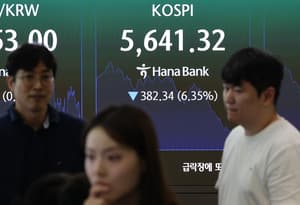
South Korea's Stock Market Plunges as AI-Driven Boom Fades
South Korea's KOSPI index has lost nearly $2.18 trillion in value over two sessions as leveraged bets on AI-linked chipmakers unwind, prompting emergency talks between the finance minister, the Bank of Korea and regulators.
South Korea's KOSPI index has lost nearly $2.18 trillion in value over two sessions as leveraged bets on AI-linked chipmakers unwind, prompting emergency talks between the finance minister, the Bank of Korea and regulators.
South Korea's stock market suffered a second straight day of steep losses on Wednesday, with the benchmark KOSPI index sinking as much as 12.6 percent before paring the decline to close 6 percent lower. The rout followed a near 11 percent plunge a day earlier, and together the two sessions erased roughly $2.18 trillion from the value of Seoul-listed shares, putting the exchange on pace for its steepest monthly loss on record.
The sudden reversal follows weeks of euphoria around memory-chip makers such as Samsung Electronics and SK Hynix, whose shares had soared on the back of surging global demand for artificial-intelligence hardware. Analysts say the collapse has less to do with weakening AI demand than with the unwinding of heavily leveraged positions built up during the rally. "If you look at what is falling in the market, it has been the stocks in which you have the most leverage," said Frank Benzimra, head of Asia equity strategy at Societe Generale in Hong Kong.
The volatility spilled beyond South Korea. Jon Withaar, a senior portfolio manager at Pictet Asset Management in Singapore, described signs of panic and forced selling across Asian technology stocks, adding that out-of-favour Japanese names such as Nintendo and Sony rallied sharply as money rotated out of the region's chip winners.
The turmoil has become a political flashpoint in Seoul. Facing pointed questions from lawmakers, Finance Minister Koo Yun-cheol apologised for the government's earlier approval of single-stock leveraged exchange-traded funds, acknowledging the products had not been reviewed carefully enough before they were allowed to trade.
Late Wednesday, the finance minister, the governor of the Bank of Korea and top financial regulators held an emergency meeting, their second in two weeks after a July 16 session that produced an initial round of curbs on leveraged ETF trading. Following the latest talks, the Ministry of Finance said it would move quickly to tighten rules further, including capping how much of an investor's portfolio can go into single-stock leveraged products, citing a possible limit of 20 percent, alongside higher trading costs and mandatory simulated-trading requirements for new participants. The ministry also said it would draft a legal framework allowing emergency market-stabilisation measures in future.
Despite the scale of the slide, which has now wiped out nearly 40 percent of the KOSPI's value from a peak reached little more than a month ago, the index remains up 41.5 percent for the year in dollar terms, still the best performance among the world's major stock markets in 2026.
Related companies
Where it matters
Related coverage
SK hynix Profit Jumps 1,242% on AI Chip Boom, but Shares Slide on Growth Worries
SK Group Chairman Buys SK hynix Shares for the First Time
Samsung Life Insurance Shares Plunge 6.84% to 265,500 Won Amid Market-Wide Sell-off