SK hynix Profit Jumps 1,242% on AI Chip Boom, but Shares Slide on Growth Worries
SK hynix posted a record 93.9 trillion won quarterly profit driven by soaring demand for AI memory chips, yet its stock fell nearly 10% as revenue missed forecasts and investors questioned how long the AI spending boom can last.
SK hynix posted a record 93.9 trillion won quarterly profit driven by soaring demand for AI memory chips, yet its stock fell nearly 10% as revenue missed forecasts and investors questioned how long the AI spending boom can last.
SK hynix, the memory chip affiliate at the heart of SK Group's business empire, reported a stunning 1,242% year-on-year jump in second-quarter net profit to 93.9 trillion won (about €56.9 billion), the company's best quarterly result on record. The surge was powered by explosive demand for high-bandwidth memory (HBM) chips, the specialized components that feed the AI data centers being built around the world.
Operating profit for the April-to-June period climbed 557% from a year earlier to 60.5 trillion won (€36.6 billion), while revenue reached 79.3 trillion won (€48 billion). Part of the bottom-line boost came from a one-time gain tied to the sale of a portion of SK hynix's stake in Japanese flash-memory maker Kioxia, another company riding the AI wave.
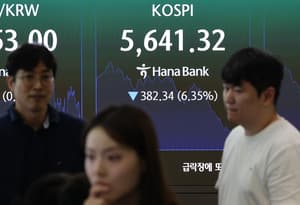
Despite the blockbuster numbers, investors were unimpressed. Shares in the Icheon-based chipmaker closed 9.6% lower in Seoul trading after both revenue and operating profit came in below analyst expectations, adding to a 14% drop the previous day. Over the past month, SK hynix stock has lost roughly a third of its value, while larger rival Samsung Electronics has fallen even further, as markets grapple with fears that AI infrastructure spending may be overheating.
Park Joon-deok, marketing chief of SK hynix's AI memory chip division, sought to reassure investors on an earnings call, acknowledging concerns that AI infrastructure spending could be cooling. He argued that shifts such as companies renting data-center capacity instead of building their own, and the emergence of leaner AI models, reflect efficiency gains rather than a pullback in overall investment.
The company said it plans to invest around 40 trillion won (€24.2 billion) this year to keep pace with orders, noting that major technology firms continue to request additional supply as their AI infrastructure grows more complex. SK hynix, a key supplier of HBM chips to Nvidia, also pointed to sustained revenue from AI services as a reason to expect memory demand to hold up.
The results land just days after parent SK Group unveiled a $500 billion partnership with Nvidia to build out AI infrastructure, and weeks after SK hynix raised $26.5 billion through a US share offering, one of the largest of its kind globally. KB Securities analyst Kim Dong-won predicted memory chip prices could climb at least 30% in the third quarter, with supply shortages likely to persist until 2028. Samsung Electronics, which has forecast an approximate 1,800% jump in its own quarterly operating profit, is due to report earnings on Thursday.
Related companies
Where it matters
Related coverage

SK Group Chairman Buys SK hynix Shares for the First Time
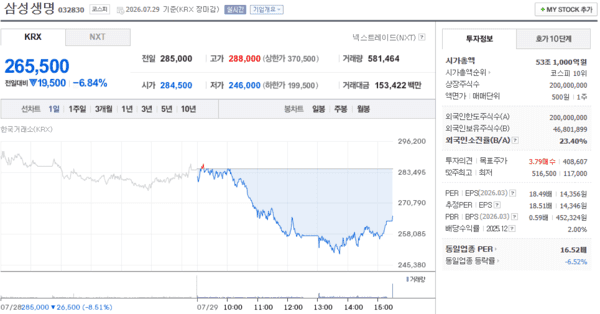
Samsung Life Insurance Shares Plunge 6.84% to 265,500 Won Amid Market-Wide Sell-off

South Korea's Stock Market Plunges as AI-Driven Boom Fades