SK Innovation Shares Hit 52-Week High as Battery Unit SK On Wins Big U.S. ESS Deal
SK Innovation stock surged to a 52-week high after subsidiary SK On landed a roughly 1.5 trillion won ESS battery supply deal with a U.S. firm, sparking hopes the long-struggling battery arm could become a growth driver, though a planned merger with SKIET still tempers optimism.
SK Innovation stock surged to a 52-week high after subsidiary SK On landed a roughly 1.5 trillion won ESS battery supply deal with a U.S. firm, sparking hopes the long-struggling battery arm could become a growth driver, though a planned merger with SKIET still tempers optimism.
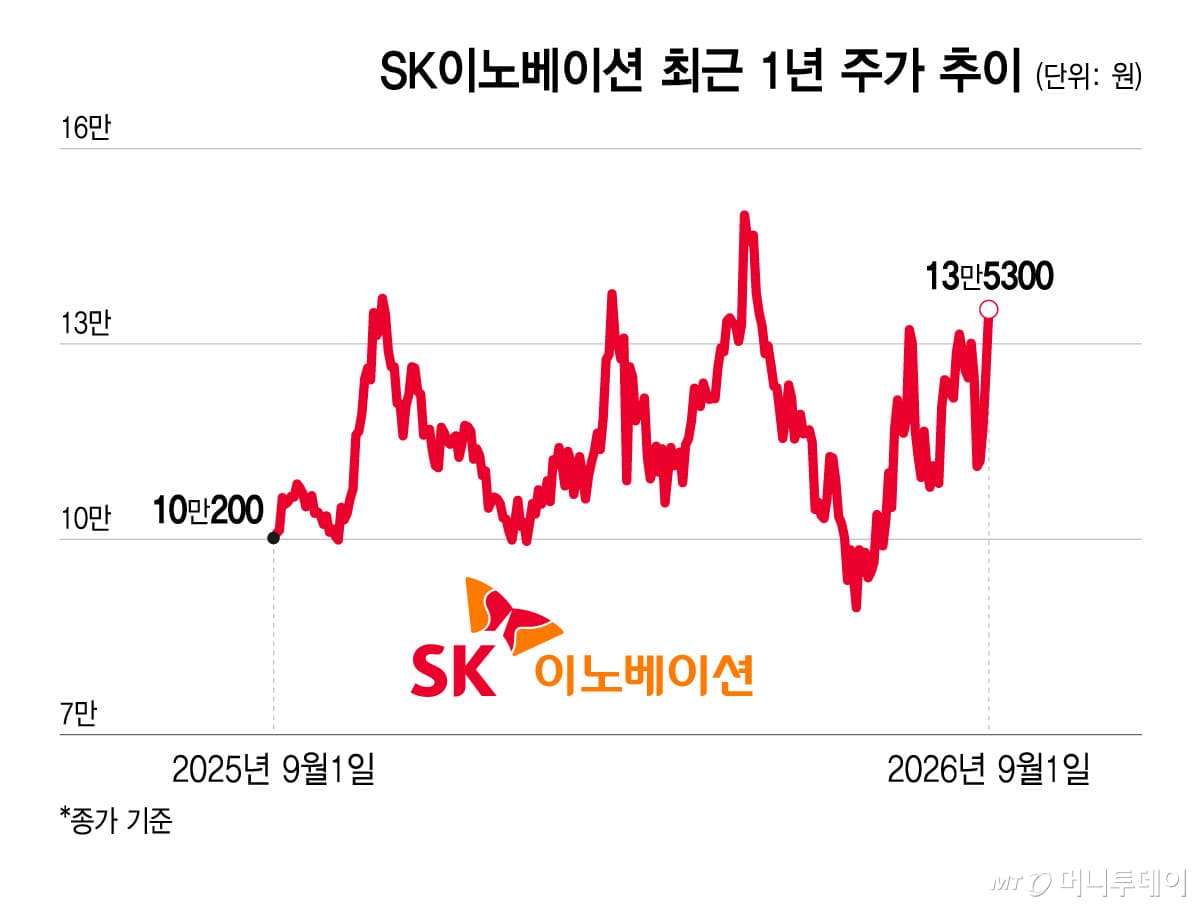
SK Innovation shares jumped to a fresh 52-week high on September 1, as investors began to reconsider whether SK On, the battery affiliate long seen as a drag on the parent's earnings, could finally turn into a source of growth.
On the Korea Exchange, SK Innovation (096770) closed at 135,300 won, up 9,800 won, or 7.81%, from the previous session — its highest closing level since May 7 and its fourth straight day of gains. The price now sits 54% above the stock's 52-week low of 87,700 won, hit on June 26.
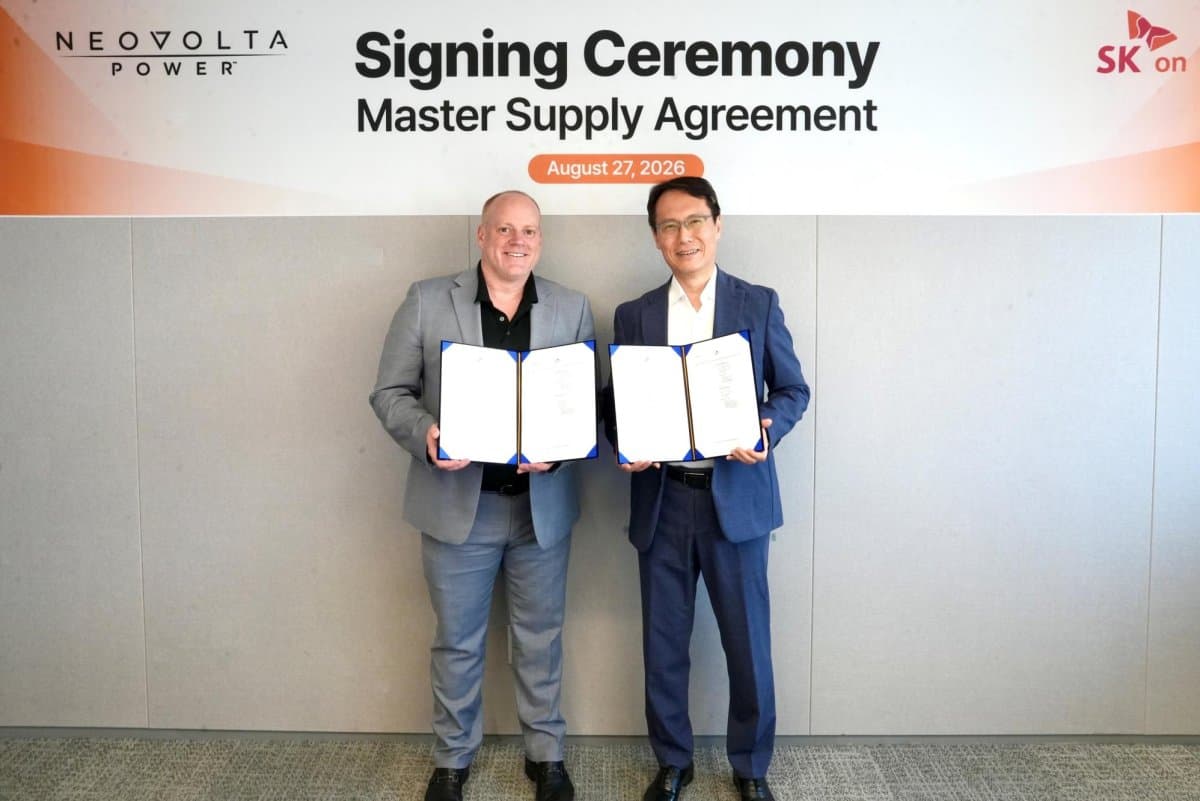
The rally was driven largely by news that SK On signed a five-year supply agreement with U.S. energy storage system maker Nevoltaic Power. Under the deal, announced on August 27, SK On will supply a total of 9 gigawatt-hours of lithium iron phosphate (LFP) pouch battery cells for ESS applications between 2027 and 2031, a contract industry estimates put at roughly 1.5 trillion won. The two companies are also discussing a further 9GWh expansion this year that would push their combined cooperation to 18GWh.
Brokerages broadly welcomed the order but flagged that a separate issue — SK Innovation's proposed merger with battery separator maker SK IE Technology (SKIET) — continues to weigh on how investors value the stock. iM Securities researcher Jeon Yoo-jin said the more significant implication of the Nevoltaic deal may be the potential for SK On to secure additional direct-sale contracts, even suggesting a scenario in which SK On could eventually supply ESS batteries to power plants within the SK group itself. Still, Jeon cautioned that the ESS order alone is "absolutely insufficient" to dispel investor discontent tied to the SKIET merger.
Analysts Lee Jin-myung and Kim Myung-joo of Shinhan Investment Corp echoed that view, noting that narrowing battery losses, expanding ESS orders, lower net capital spending and progress toward normalizing SKIET's operations are all meaningful positives for earnings and cash flow. However, they said lingering uncertainty around the merger will likely keep any re-rating of the stock gradual rather than immediate.
SK Innovation's shares have a long memory of boom and bust tied to the battery business. The stock soared roughly 490% between 2020 and early 2021 amid the first wave of global EV enthusiasm, touching around 320,000 won, a level it has never revisited since. The subsequent slowdown in EV demand — often described as an industry "chasm" — hit battery makers' growth and profitability, and SK On's mounting losses dragged down its parent's overall financial health. In response, SK Group has spent the past two years restructuring its energy affiliates, folding the cash-generative SK E&S into SK Innovation as an internal company and later merging SK Trading International, SK Enterm and SK Enmove into SK On to shore up its balance sheet.
Related companies
Where it matters
Related coverage
SK On Lands Multi-Year Battery Supply Deal with US Firm NeoVolta Power
SK Innovation Shares Jump 7% After SK On Wins 1.5 Trillion Won Battery Deal
SK Innovation stock surged more than 7% on Aug. 31 after battery unit SK On secured a roughly 1.5 trillion won energy storage system contract, far outpacing the broader market.
_81069.jpg&w=3840&q=75)
Doosan Enerbility Wins Manufacturing Contract for TerraPower's Natrium Reactor
Samsung and SK hynix's Falling China Revenue Share Is a 'Statistical Illusion,' Data Shows
South Korea's semiconductor exports surged 165% through July to $233.3 billion, with China remaining the top buyer, even as Samsung Electronics and SK hynix appear to derive a smaller share of revenue from the country. Analysts say the drop is purely proportional, masking record absolute sales driven by HBM and AI-related chips.