Samsung Biologics Defends 3.9 Trillion Won Rights Offering as Key to Long-Term Growth Plan
Samsung Biologics says its planned 3.9 trillion won ($2.8 billion) rights offering is essential to complete a roughly 15.4 trillion won investment roadmap through 2034, arguing equity is a safer funding route than debt.
Samsung Biologics says its planned 3.9 trillion won ($2.8 billion) rights offering is essential to complete a roughly 15.4 trillion won investment roadmap through 2034, arguing equity is a safer funding route than debt.
Samsung Biologics is pushing back against investor unease over its newly announced 3.9 trillion won ($2.8 billion) rights offering, telling shareholders the capital raise is necessary to complete an investment roadmap worth roughly 15.4 trillion won that runs through 2034.
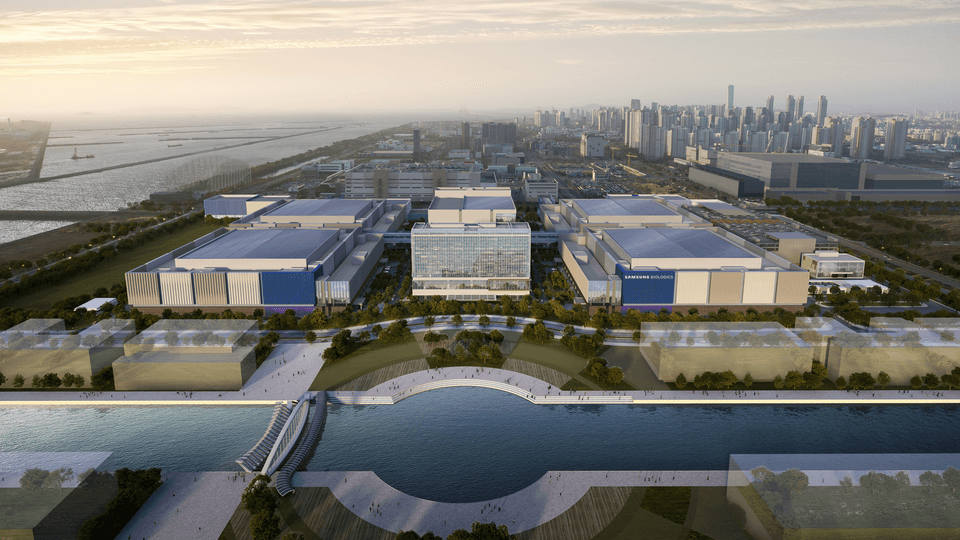
The Incheon-based contract drug manufacturer's board approved the rights offering on Aug. 28, structured as a shareholder-allocation issue followed by a public sale of any unsubscribed shares. Of the proceeds, about 2.71 trillion won is earmarked for the previously announced acquisition of Switzerland's PolyPeptide Group, while roughly 294.8 billion won will fund the expansion of Plant 6 at the company's Bio Campus II in Songdo, Incheon.
At an online briefing for individual shareholders on Sept. 3, Yoo Seung-ho, deputy head of Samsung Biologics' management support center, laid out the rationale behind the raise. "We judged now is the time to carry out our next investment phase," Yoo said, referring to the need to secure a mid- to long-term growth foundation. He added that equity, rather than debt, was chosen because of current interest rates, the burden of refinancing obligations at maturity, and the company's diminishing capacity to take on further borrowing.
Yoo said Samsung Biologics held about 2.2 trillion won in cash as of the first half of this year, but warned that without the rights offering, the company would face a cash shortfall of roughly 500 billion won by year-end. He noted that a large share of the 15.4 trillion won investment program is scheduled for execution in the earlier part of the plan, making it necessary to lock in liquidity ahead of time. Funding such large-scale investment through debt, he argued, would saddle the company with ongoing interest costs and limit its future ability to raise capital.
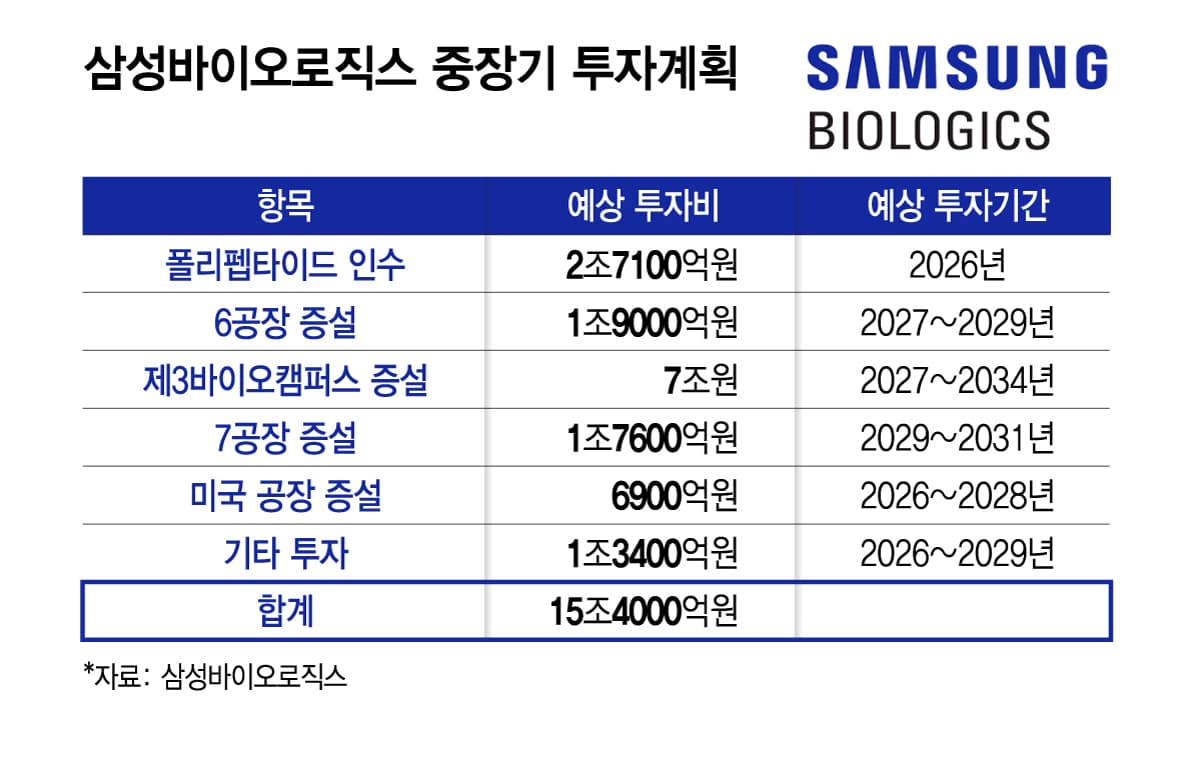
The broader 15.4 trillion won roadmap includes about 1.9 trillion won for building Plant 6 and related facilities, 1.76 trillion won for expanding Plant 7, roughly 7 trillion won for a new third bio campus, 690 billion won for expanding U.S. production capacity, and 1.34 trillion won for equipment tied to antibody-drug conjugates, finished drug products and small-scale CDMO operations.
On the question of shareholder returns, Yoo said Samsung Biologics would prioritize building its growth base over near-term payouts such as dividends, arguing that translating growth into earnings and higher corporate value ultimately serves shareholders better. He said the company's dividend and broader shareholder-return policy would be reassessed in three years, once the investment program, cash-generation ability and overall financial position become clearer.
Asked about a potential stock split, Yoo said, "We are not currently reviewing a stock split," but added that the company would consider one actively once it judges that sufficient corporate value has been created.