How Russia and China Keep Helping North Korea Dodge Sanctions
A new analysis argues that Russia and China have systematically undermined UN sanctions on North Korea for years, and that this support has only deepened as Pyongyang backs Moscow's war in Ukraine.
A new analysis argues that Russia and China have systematically undermined UN sanctions on North Korea for years, and that this support has only deepened as Pyongyang backs Moscow's war in Ukraine.
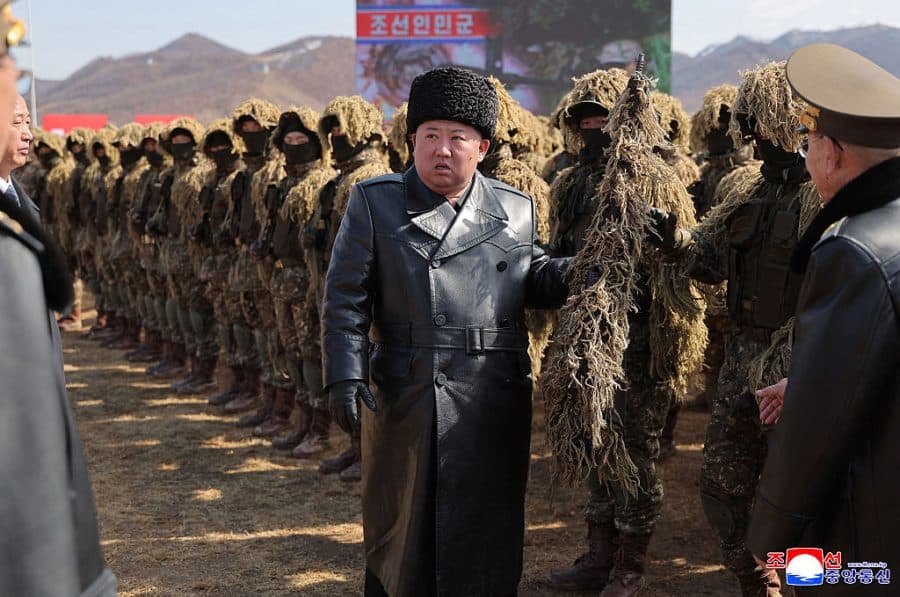
North Korean leader Kim Jong-un has reportedly amassed a foreign-currency war chest of more than $20 billion, a sign of how thoroughly international sanctions meant to isolate his regime have failed. According to an analysis published this week, much of the credit — or blame — for that windfall belongs not to North Korea's own ingenuity alone, but to the quiet complicity of its two giant neighbors, Russia and China.
The roots of the problem trace back to December 2017, when the UN Security Council, including Russia and China, approved what was then the toughest sanctions package ever imposed on Pyongyang. It capped North Korean crude oil imports at four million barrels a year and ordered every country hosting North Korean laborers to send them home within two years. On paper, the measures were designed to choke off the hard currency that funds North Korea's nuclear and missile programs.
In practice, the analysis argues, Beijing and Moscow never intended to comply. Roughly 100,000 North Korean workers are still believed to be employed in Russia and China today, many in construction or as IT contractors who quietly work for firms worldwide. Around 90 percent of their wages reportedly flow straight back to Pyongyang, generating between $200 million and $500 million a year for the regime — a figure said to be climbing rather than shrinking.
Oversight of the sanctions regime has also collapsed. In March 2024, the UN Panel of Experts tasked with monitoring violations was effectively shut down after Russia vetoed its renewal and China abstained, leaving no independent body to formally document how the rules are being broken. Since then, Russia has reportedly been supplying North Korea with thousands of tons of crude oil every month, far beyond what UN caps allow.
The stakes have risen further as North Korea has become an active partner in Russia's war against Ukraine, supplying artillery shells, missiles and troops in exchange for military technology, oil, and other assistance. Analysts warn that even if the war in Ukraine ends, the Pyongyang-Moscow relationship is unlikely to unwind, given Russia's labor shortages and North Korea's ready supply of workers willing — or compelled — to be sent abroad.
The broader implication, according to the analysis, is that the UN Security Council can no longer function as an effective sanctions enforcer against North Korea, since two of its five permanent members are actively shielding Pyongyang from consequences. That leaves Washington, Seoul and their allies with far fewer tools to pressure Kim Jong-un's government to curb its nuclear ambitions.
Where it matters
Related coverage
Lee Proposes Talks With North Korea to Formally End Korean War, Halt Nuclear Program
North Korea Turns to Chinese Joint Ventures to Process Exports at Home
Zelenskyy Warns Up to 50,000 North Korean Troops Could Join Russia's War
