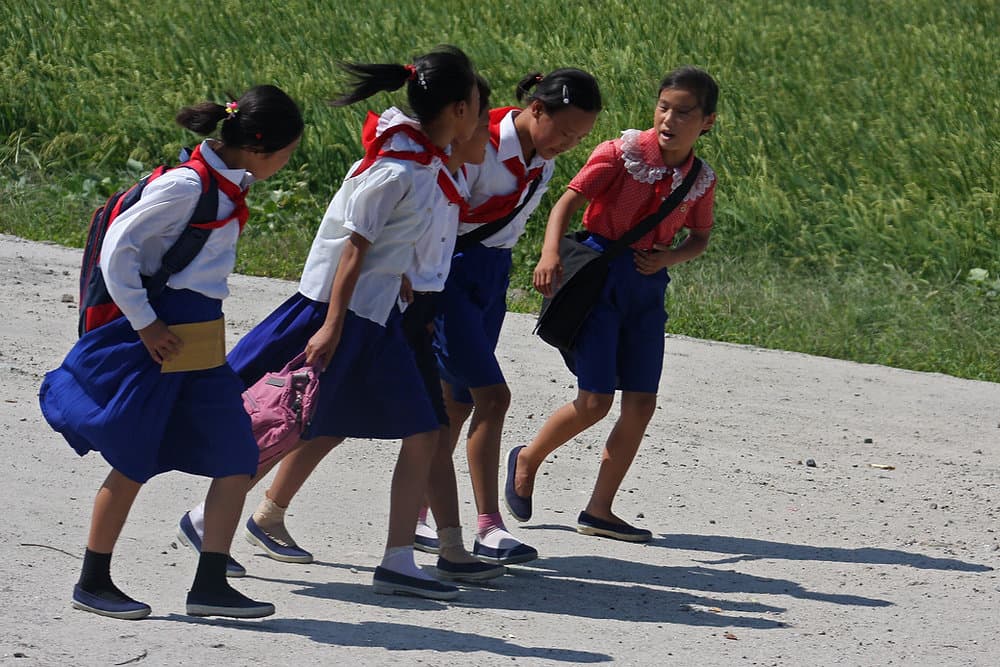
North Korean Defectors Accuse the Regime of Torture
A Seoul court ruled in favor of a North Korean defector's torture compensation lawsuit against Pyongyang, spotlighting the abuses escapees face in detention camps and during their journey through China.
A Seoul court ruled in favor of a North Korean defector's torture compensation lawsuit against Pyongyang, spotlighting the abuses escapees face in detention camps and during their journey through China.
A South Korean court has sided with a North Korean defector who accused Pyongyang of torture, adding a rare legal precedent to years of testimony from escapees about the brutal conditions inside the North's detention system.
On August 28, the Seoul District Court ruled in favor of a compensation lawsuit filed by Choi Min-kyung, head of the North Korea Imprisonment Victims' Family Association, who sought roughly $36,300 in damages from the North Korean regime. The hearing went ahead without any representation from the defense, as Pyongyang does not recognize the South's judicial authority over its citizens or officials.
Choi first fled North Korea in 1997 but was forcibly returned by Chinese authorities in 2008 after living undocumented across the border. Once repatriated, she was held in a North Korean detention camp, where she has said she endured torture and sexual violence. Now settled in South Korea, Choi was able to bring her case before a South Korean court because Seoul's constitution asserts territorial sovereignty over the entire Korean peninsula, and its nationality law treats North Korean-born individuals as South Korean citizens.
Her case reflects a broader, heavily gendered pattern among those who flee the North. Women made up 72 percent of the defector population as of 2024, according to South Korea's Ministry of Unification, largely because North Korean men are bound to roughly a decade of mandatory military service that limits their ability to escape. Most defectors cross the Yalu or Tumen rivers into China before attempting the far longer route through Southeast Asia, with an escape only considered complete once they reach a South Korean embassy in Thailand, Laos, or Myanmar.
That journey through China carries its own dangers. Beijing classifies North Korean escapees as illegal economic migrants rather than refugees and, under a 1986 bilateral agreement with Pyongyang, routinely detains and repatriates them. Human Rights Watch has warned that those sent back face a heightened risk of forced disappearance, torture, sexual violence, forced labor, or execution once in North Korean custody.
Women transiting through China face additional threats of trafficking and coerced marriage, a demand fueled in part by the long-term gender imbalance left by China's former one-child policy. A 2019 report by the Korea Future Initiative found that half of North Korean women and girls aged 15 to 25 who fled into China were sold into prostitution, while roughly 30 percent were sold into forced marriages.
The Human Rights Research Center, which documented Choi's case, is calling on Pyongyang to end torture and shut down its detention facilities, and is urging China to honor its obligations under the UN Refugee Convention by granting protected status to North Koreans rather than returning them to the risks described by rights groups.
Where it matters
Related coverage
North Korea Fires Two Short-Range Missiles Ahead of Trump-Xi Summit
S. Korea, U.S., Japan Hold Consultations Over N. Korea's Missile Launches
North Korea Denounces Sanctions Report as 'Illegal', Defends Overseas Labor