How Power Really Works in North Korea: Kim Jong Un, the Party and the Army
A new Council on Foreign Relations backgrounder maps out how Kim Jong Un has concentrated authority in himself and the Workers' Party of Korea, reshaping the military's role and keeping elites on edge through periodic purges.
A new Council on Foreign Relations backgrounder maps out how Kim Jong Un has concentrated authority in himself and the Workers' Party of Korea, reshaping the military's role and keeping elites on edge through periodic purges.
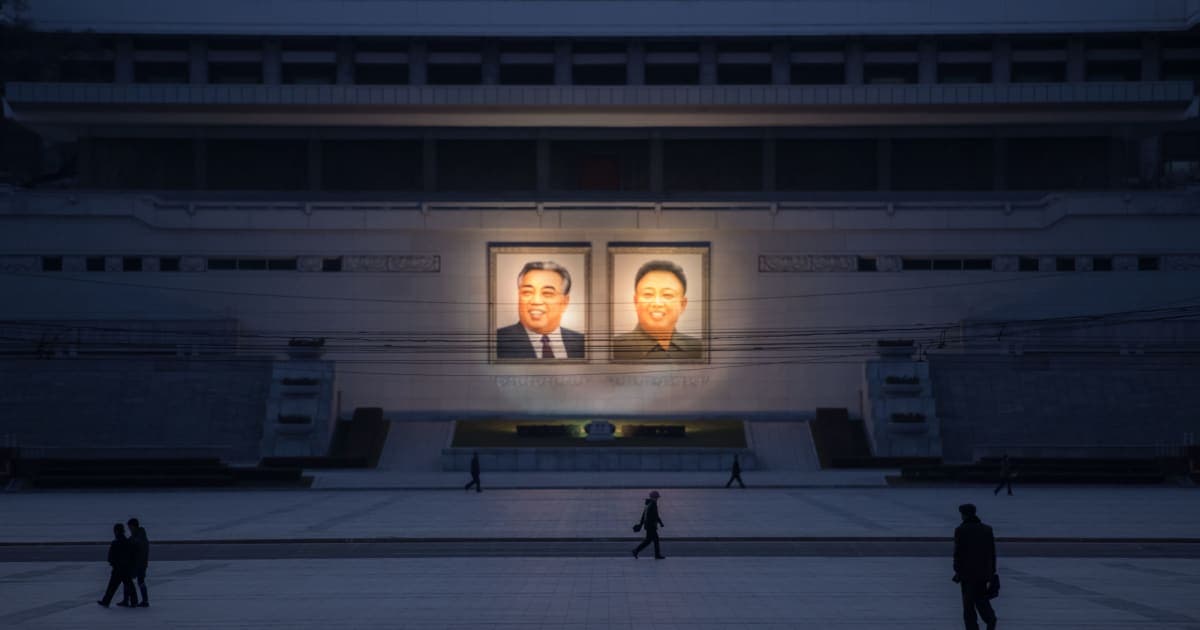
For more than seven decades, North Korea has been run as a family enterprise. The Council on Foreign Relations has published an updated backgrounder explaining how, under the third-generation leader Kim Jong Un, virtually every meaningful decision in Pyongyang still traces back to one man, even as the institutions around him have been reshuffled to entrench his control.
The Kim family has held the title of supreme leader since founder Kim Il Sung took power in 1948, followed by his son Kim Jong Il and, since 2011, his grandson Kim Jong Un. According to the report, Kim Jong Un moved quickly after inheriting power at age 28 to install loyalists, revive the Workers' Party of Korea (WPK) as the main center of policymaking, and claw back authority that elite factions had accumulated late in his father's rule. Periodic purges, including the 2013 execution of his uncle Jang Song Thaek and the 2015 removal of defense chief Hyon Yong Chol, have kept elites off balance. As North Korea Leadership Watch founder Michael Madden puts it, such episodes create deliberate "upheaval in the system" that reinforces Kim's grip.
The backgrounder describes the WPK's Central Committee, its Politburo and the Organization Guidance Department as the true engines of policy, with roughly twenty subordinate departments feeding proposals up from state and military bodies for approval. Analyst Ken Gause of the research group CNA notes that the military and party are "fused very closely," with political commissars embedded throughout the roughly 1.2-million-strong Korean People's Army to ensure loyalty to the party rather than to individual commanders.
That balance between party and military has shifted over the decades. Kim Jong Il's era leaned on an ideology of military primacy known as songun, but Kim Jong Un has pushed to subordinate the armed forces more firmly under party control, notably replacing three senior generals in 2018 to install commanders loyal to him personally. The military still runs dozens of trading companies and economic sites, though the report notes Kim has gradually shifted some economic assets, such as fisheries operations, from military to civilian oversight.
Outside the formal chain of command, the report points to an unusually powerful circle of family members and roughly fifty elite families, estimated at up to two thousand people, who control hard currency, trade networks and access to information. Kim Jong Un's sister, Kim Yo Jong, has taken an increasingly visible public role, appearing at summits with foreign leaders and issuing statements in her own name, fueling speculation she could figure in any future succession, alongside other relatives such as half-sister Kim Sol Song and brother Kim Jong Chul.
The backgrounder concludes that Kim's long-term challenge is balancing his push for modest economic liberalization, including greater autonomy for local markets and infrastructure projects such as ski resorts and a new airport, against the risk that opening up could loosen his hold on the elites who keep the system running. Sustaining loyalty from the party, the army and the donju merchant class that has grown wealthy in North Korea's informal markets, analysts say, will remain central to how long the current order can hold.
Where it matters
Related coverage
North Korea Keeps China at Arm's Length Even as Ties With Russia Deepen
A new analysis from 38 North finds Pyongyang is still holding back public displays of warmth toward Beijing even as it aligns more closely with China on security issues, in sharp contrast to its increasingly effusive language toward Moscow.
North Korea Fires Barrage of Short-Range Missiles a Day After Rejecting Trump Overture
North Korea launched roughly 10 short-range ballistic missiles toward the sea, South Korea's military said, just a day after Pyongyang brushed off a U.S. move to scale back joint drills.

North Korea Fires Ballistic Missiles Hours After Trump Signals New Talks With Kim Jong Un
