LG Energy Solution Bets on Storage to Ease AI-Era Grid Strain
At Seoul's Battery Foundry Forum, LG Energy Solution outlined a plan to use energy storage systems to relieve grid bottlenecks driven by AI data centers and renewables, and forecast rising demand for six-hour-plus long-duration batteries.
At Seoul's Battery Foundry Forum, LG Energy Solution outlined a plan to use energy storage systems to relieve grid bottlenecks driven by AI data centers and renewables, and forecast rising demand for six-hour-plus long-duration batteries.
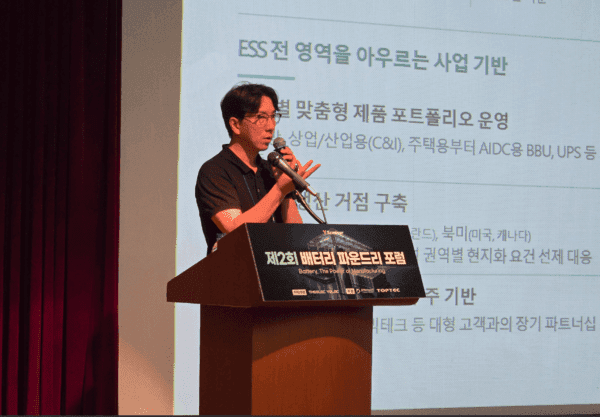
LG Energy Solution is positioning energy storage systems (ESS) as central to solving the grid strain created by the rapid spread of artificial intelligence data centers and renewable power, the company said at the second Battery Foundry Forum held in Seoul on July 15.
Kim Hyun-tae, vice president and head of ESS product planning and strategy, told the forum that storage is evolving from a simple way to bank electricity into critical infrastructure that keeps power grids stable. As renewable generation grows, he said, the role of ESS in balancing supply and demand will become increasingly important.
A key part of the pitch is what the company calls transmission and distribution deferral ESS. Because building new power lines can take years, storage can absorb surplus electricity and release it where demand is high, easing congestion without immediate investment in new infrastructure. Kim said LG Energy Solution has repeatedly proposed such business models to the South Korean government, Korea Electric Power Corp. and the Korea Power Exchange.
The company points to South Korea's own geography to illustrate the need. The Honam region produces excess solar power by day but lacks industry to consume it, while the planned Yongin semiconductor cluster will demand vast amounts of electricity long before new transmission lines are ready. Surplus power stored in the south could be shifted to Yongin during off-peak hours, narrowing the gap between grid buildout and industrial demand.
LG Energy Solution is also building operational experience. In September 2024 it deployed South Korea's first ESS tied to a distribution grid on Jeju Island, where it also runs a virtual power plant business and handles roughly 30 percent of the island's renewable market. It was recently chosen as an operator in the climate ministry's AI distribution grid ESS program, securing all seven lines allowed to a single operator, or 140 megawatt-hours of capacity.
Looking ahead, the firm expects sharp growth in long-duration storage. Most ESS products today store two to four hours of electricity, but demand is expected to shift toward systems that can hold six hours or more. LG Energy Solution projects that six-hour-plus products will make up more than 15 percent of the U.S. ESS market by 2030, and it is developing sodium-ion batteries as a core technology for that segment.
Storage is now one of the company's flagship growth businesses. Its portfolio spans grid-scale, commercial, residential, and backup power for AI data centers, and its ESS order backlog topped 140 gigawatt-hours at the end of 2025. LG Energy Solution aims to lift ESS from about 20 percent of revenue today to 40 percent over time.
Related companies
Where it matters
Related coverage
Hanwha Ocean's 'Floating Refinery' Sets Sights on South American Deep-Sea Oilfields
Samsung SDI to Start Making LFP Batteries in Indiana for US Energy Storage Market
Samsung SDI clinches US battery deal worth over $1.4 billion