S. Korea, US, Japan Reaffirm North Korea Deterrence, Widen Security Cooperation
The foreign ministers of South Korea, the United States and Japan met in Manila to renew their commitment to deterring North Korea and pursuing denuclearization, while agreeing to expand cooperation on maritime security, supply chains and economic coercion.
The foreign ministers of South Korea, the United States and Japan met in Manila to renew their commitment to deterring North Korea and pursuing denuclearization, while agreeing to expand cooperation on maritime security, supply chains and economic coercion.
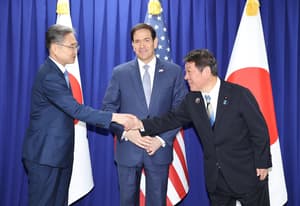
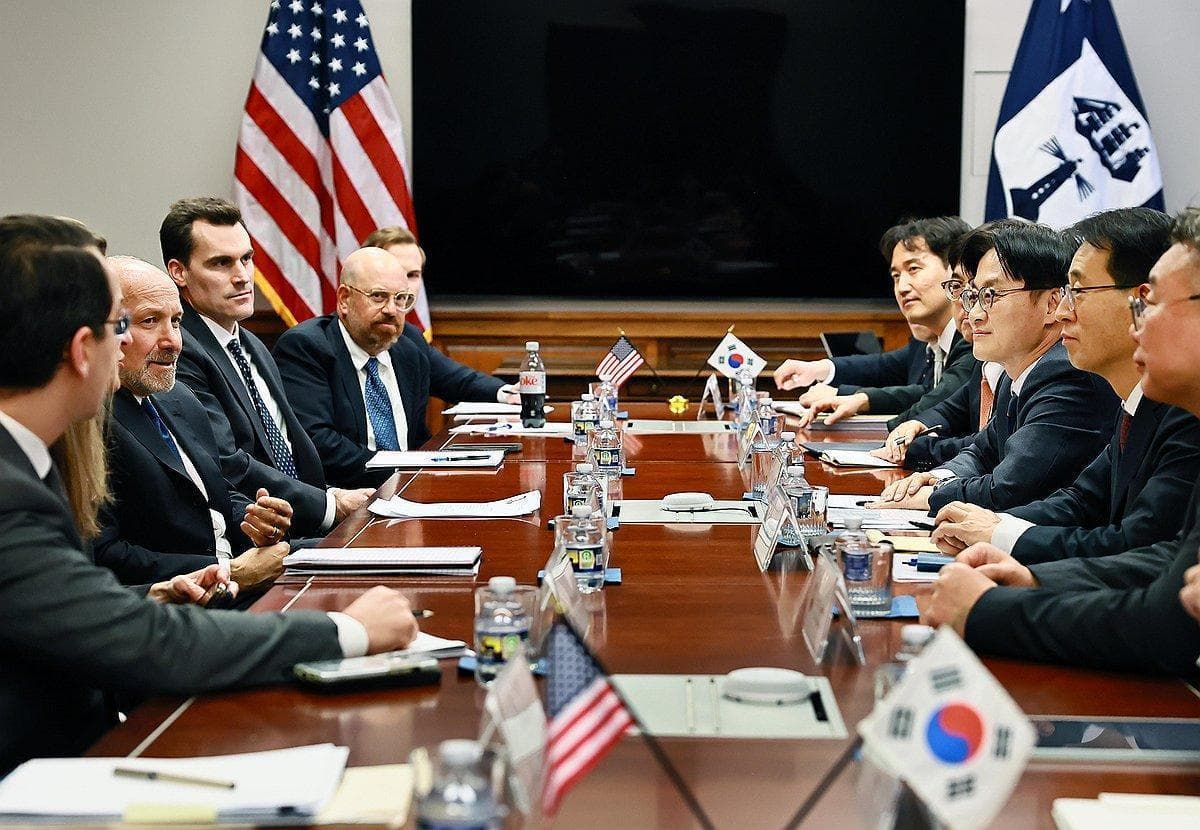
South Korean Foreign Minister Cho Hyun, US Secretary of State Marco Rubio and Japanese Foreign Minister Toshimitsu Motegi held trilateral talks on Wednesday in Manila, on the margins of a series of ASEAN-related ministerial meetings, reaffirming their shared resolve to maintain a strong deterrence posture against North Korea and to keep pursuing the denuclearization of the Korean Peninsula.
According to South Korea's Ministry of Foreign Affairs, the three top diplomats exchanged assessments of recent developments on the peninsula and agreed to keep close coordination on North Korea policy. They also pledged to continue seeking peace and stability through dialogue while preserving deterrence against Pyongyang.
The session marked the second trilateral foreign ministers' meeting in just two weeks, following talks on the sidelines of the NATO summit in Ankara, where the allies signed a cooperation memorandum on jointly deploying small modular reactors in third countries. Cho said the quick succession of meetings underscored how much weight the three governments place on trilateral coordination, adding that holding talks alongside the ASEAN gatherings helped project a unified message to the wider region.
Beyond North Korea, the ministers discussed regional security challenges, including tensions over freedom of navigation and overflight, and reaffirmed support for the rule of law at sea as set out under the UN Convention on the Law of the Sea. They agreed to strengthen maritime security cooperation across the Indo-Pacific, a stance that also appeared to reflect concerns over disruptions to shipping linked to the Iran-related conflict in the Middle East. Speaking separately in Manila, Rubio said Washington remained willing to negotiate with Tehran but questioned whether Iran was genuinely committed to diplomacy.
On the economic front, the three governments agreed to deepen practical cooperation on nuclear energy, critical minerals and emerging technologies, while coordinating on supply chain diversification, protection of advanced technologies and responses to economic coercion. They also agreed to broaden cooperation into transnational crime, disaster relief and humanitarian assistance, and to pursue additional consultations aimed at producing tangible results for their citizens.
North Korea's deepening ties with Russia and China also featured in the discussions. Seoul's Foreign Ministry noted that Pyongyang appears set to skip the ASEAN Regional Forum for a second straight year, even as North Korean Foreign Minister Choe Son-hui recently traveled to Moscow for meetings with Russian President Vladimir Putin and other senior officials, while exchanges with Beijing have intensified around the 65th anniversary of the two countries' friendship treaty. Ministry spokesperson Park Il said Seoul hopes such exchanges will ultimately help bring North Korea back to dialogue.
The three ministers agreed to keep meeting and communicating as frequently as possible, including on the sidelines of future multilateral gatherings, to build on the momentum from Wednesday's talks.
Where it matters
Related coverage
Lee Jae Myung Kicks Off Latin America Tour, Pitches Region as Key to Korea's Global South Push
Lee Jae Myung Departs on 11-Day Trip Spanning San Francisco and South America
Korea Says US to Honor 15% Tariff Cap Despite New Section 301 Duties